Furnaces are the most ignored appliance in the house. They sit in a basement or closet, run for months, and get attention only when they quit. That neglect has a price: most mid-winter breakdowns trace back to something a fall tune-up would have caught, a worn igniter, a weakening capacitor, a heat exchanger starting to show stress.
Yearly professional service is the baseline. Here is how to time it, what to expect from it, and how to stretch its value across the whole heating season.
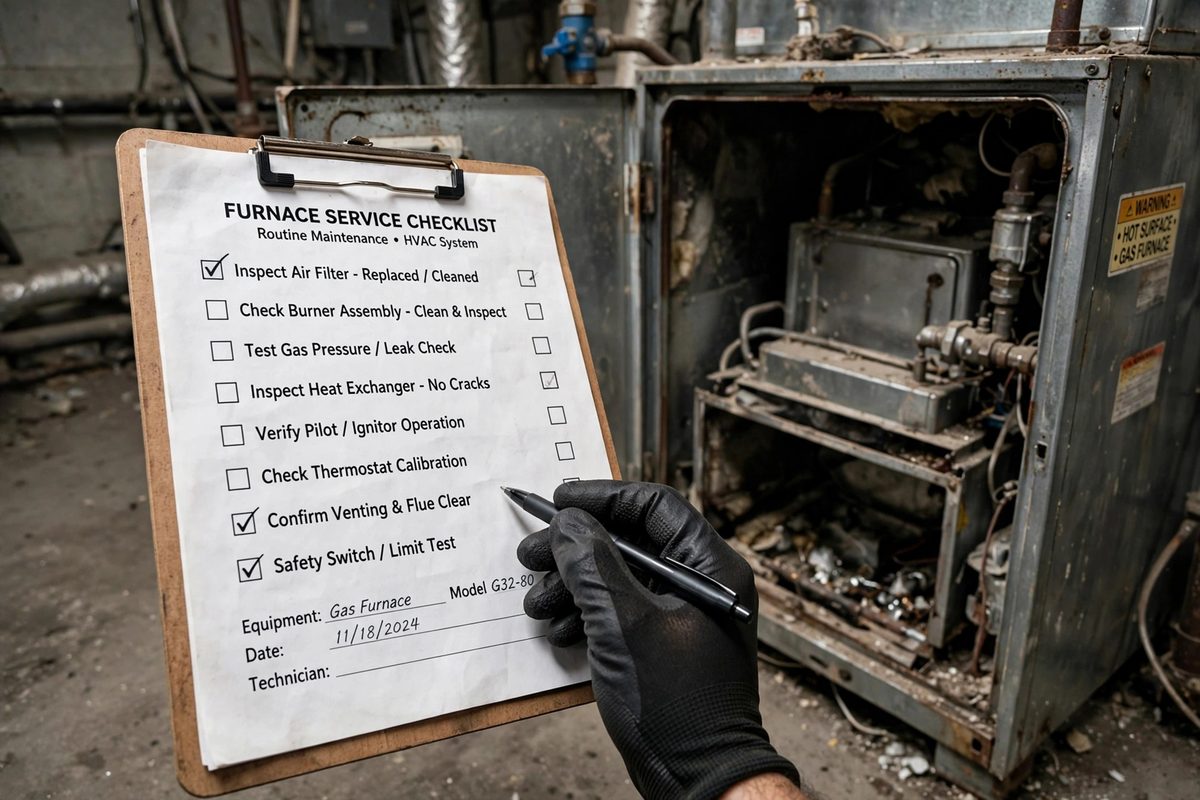
Once a year, and fall is the sweet spot
Schedule the tune-up in September or October, before the first sustained cold. Fall timing means problems get found while the weather is still mild, parts are available without emergency ordering, and you are not competing with every no-heat call in January for an appointment. A furnace serviced in fall runs its hardest months right after a professional has been through it, which is exactly the order you want.
What a real tune-up includes
A proper visit is a checklist, not a glance. Expect inspection and cleaning of the burners, a close look at the heat exchanger, testing of the igniter and flame sensor, checking electrical connections and capacitors, measuring airflow and temperature rise, lubricating moving parts where applicable, testing safety controls and limit switches, and verifying the thermostat reads accurately. The technician should also check carbon monoxide levels around the unit. If a quote describes none of this, you are not buying a tune-up. Our furnace tune-up in Herndon follows exactly this kind of checklist.
New furnaces need it too
The most common mistake with a new furnace is assuming it needs nothing for years. New parts still wear, new installations still settle, and small issues are cheapest to fix while everything is young. Just as important, the coverage that came with your new system usually expects documented regular maintenance. Skipping service on a new furnace risks both the equipment and the protection that came with the purchase.
Fall appointments fill fast. Get this year's service on the calendar before the cold settles in.
Signs yours is overdue
If you cannot remember the last service, it is overdue. Beyond that, watch for longer run times to reach the setpoint, new noises, dustier air, the burner flame looking different than it used to, or the system cycling oddly. Any of those means the furnace is asking for attention now, not next fall.
What you can do between visits
Homeowners own the simple half of furnace care: change the filter every one to three months, keep supply vents open and unblocked, keep the area around the furnace clear of storage, and test the thermostat and CO detectors when the season changes. A thermostat upgrade to a modern programmable model also helps, since steadier schedules mean less strain on the system. Do those consistently and the yearly visit stays a checkup instead of a rescue.
Frequently asked questions
Is fall really better than spring for a tune-up?
Yes. Fall service means the furnace enters its hardest months freshly inspected, and any problems get fixed in mild weather. Spring service is better than none, but it leaves the unit sitting all summer with unaddressed wear.
How long does a furnace tune-up take?
A thorough visit usually runs about an hour, longer if the technician finds issues to document or minor parts to replace. A fifteen-minute visit was not a tune-up.
Will a tune-up find a cracked heat exchanger?
A proper tune-up includes a heat exchanger inspection, which is where cracks get found early. It is one of the highest-value parts of the visit, because an early find means a planned repair instead of a midwinter emergency.
Do I need service if the furnace runs fine?
Yes. Furnaces fail quietly for a long time before they fail loudly. The whole point of yearly service is catching worn igniters, weakening capacitors, and early exchanger stress while they are still cheap, scheduled fixes.
What can I do myself between professional visits?
Change filters regularly, keep vents open and unblocked, keep the furnace area clear, and test your thermostat and CO detectors seasonally. Leave the combustion area, electrical work, and gas components to the technician.
Sources and Further Reading
Last updated: October 19, 2026
Due for this year's furnace service?
One fall visit: full inspection, cleaning, safety checks, and an honest read on your system's condition.