First, a correction to a common belief: the filter's main job is protecting the furnace, not cleaning your air. It keeps dust off the blower, the heat exchanger, and the evaporator coil. Cleaner indoor air is a welcome side effect, but the filter exists so the equipment survives. That is why a clogged filter causes breakdowns, not just dustier shelves.
With that understood, choosing a filter gets simpler. You need the right size, a type your system can breathe through, and a replacement habit you will actually keep.
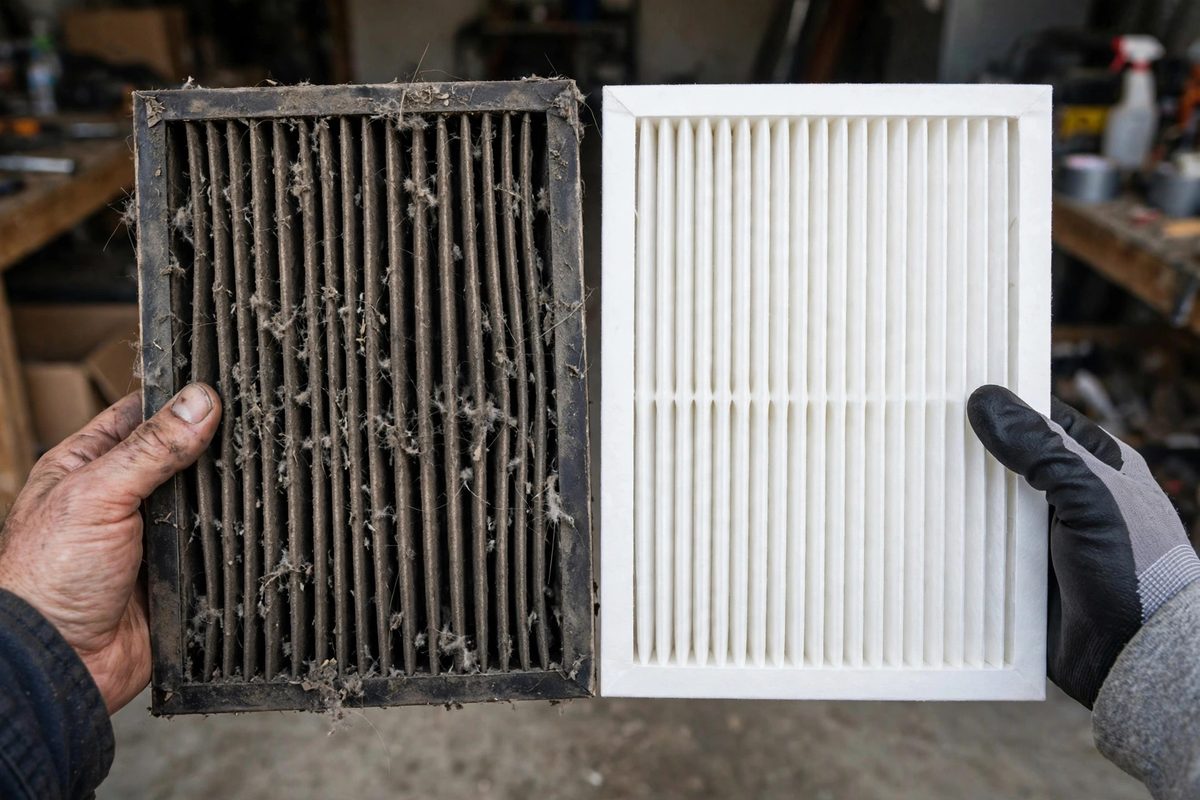
The four types you will see at the store
Basic fiberglass filters are the cheapest and thinnest. They catch large dust and protect the equipment, and not much more. Pleated filters use folded media to pack far more surface area into the same frame, catching smaller particles while lasting longer. High-MERV pleated filters go further on fine particles, good for allergy-sensitive households. Washable filters can be rinsed and reused, but they need thorough drying and regular washing to work, and most homeowners eventually neglect them. For most homes, a mid-range pleated filter is the sweet spot.
MERV ratings without the jargon
MERV rates how fine a particle the filter catches, on a scale from 1 to 16 for residential filters. Higher numbers catch smaller stuff. The catch: denser media also resists airflow more. A filter rated far above what your system was designed for can starve the blower, overheat the furnace, and trigger the limit switch. Most residential systems are happiest in the MERV 8 to 11 range. If someone in the home needs hospital-grade filtration, talk to a technician about whether the system can handle it before buying the densest filter on the shelf.
How often to actually change it
The honest answer depends on the home. Every month is right for houses with pets, smokers, or heavy dust; every two to three months suits most other homes with a pleated filter. Basic fiberglass needs monthly changes because it loads up fast. The foolproof method: check it monthly for the first season and learn your home's rhythm. A filter that looks gray and clogged at six weeks needs a six-week schedule, whatever the package says. Put a reminder on your phone, because nobody remembers on their own.
We can check the size, the slot, and whether your system can handle higher-MERV filtration.
Finding your size
The size is printed on the cardboard frame of your current filter, something like 16x25x1, meaning inches. Measure it yourself if the printing is gone, and note the thickness: a one-inch slot cannot take a four-inch filter. Buy a couple of spares so a change takes thirty seconds instead of a store trip. If your system has no obvious filter slot, check inside the furnace cabinet or the return grille; some older setups hide them well, and a technician can point it out during a furnace tune-up.
What neglect does to a furnace
A filter left in place for a year does three kinds of damage: it chokes airflow until the furnace overheats and short-cycles, it lets fine dust past the clogged media onto the blower and coil, and it forces the system to run longer for the same heat. It is the most expensive maintenance item in the house to skip, given that it costs a few minutes and a filter. Pair the habit with a whole-home humidifier if dry winter air is also on your list, and the system breathes easy all season.
Frequently asked questions
What MERV rating should I buy?
For most homes, MERV 8 to 11 hits the balance between filtration and airflow. Higher is not automatically better: too dense a filter restricts the airflow your furnace was designed around. Check your system's guidance or ask a technician before going higher.
Are washable filters a good idea?
They can be, if you actually wash and fully dry them on schedule. In practice, most washable filters end up dirtier than disposables because the washing gets skipped. If you will not maintain it religiously, disposables protect the furnace better.
Does a thicker filter work better?
Thicker filters hold more dust and last longer between changes, but only if your filter slot accepts them. Never force a thick filter into a one-inch slot or leave gaps around the frame; unfiltered air bypassing the filter defeats the purpose.
How do I find my filter size?
Read the dimensions printed on the old filter's frame, listed as length by width by thickness in inches. If the printing is illegible, measure the old filter or the slot. When in doubt, a technician can confirm it in seconds.
What if my furnace has no filter slot?
Some older systems filter at the return grille instead of the unit, and a few have truly awkward setups. Look behind return grilles and inside the furnace cabinet. A technician can locate it and, if the setup is poor, suggest a better filter arrangement.
Sources and Further Reading
Last updated: October 19, 2026
Filters are simple. Furnaces are not.
For everything beyond the filter, our tune-ups keep the whole system clean, safe, and efficient.