Both gas and electric furnaces do the same job: heat air and move it through your ducts. They just make that heat differently, and that difference ripples into installation requirements, maintenance, and everyday comfort. Plenty of homeowners inherit one type and never question it, but when replacement time comes, it is worth asking whether the other type would serve the house better.
The honest starting point is your home's existing infrastructure. Switching fuel types is possible, but it adds real work. Keeping the fuel your home already supports is usually the simpler, saner path.
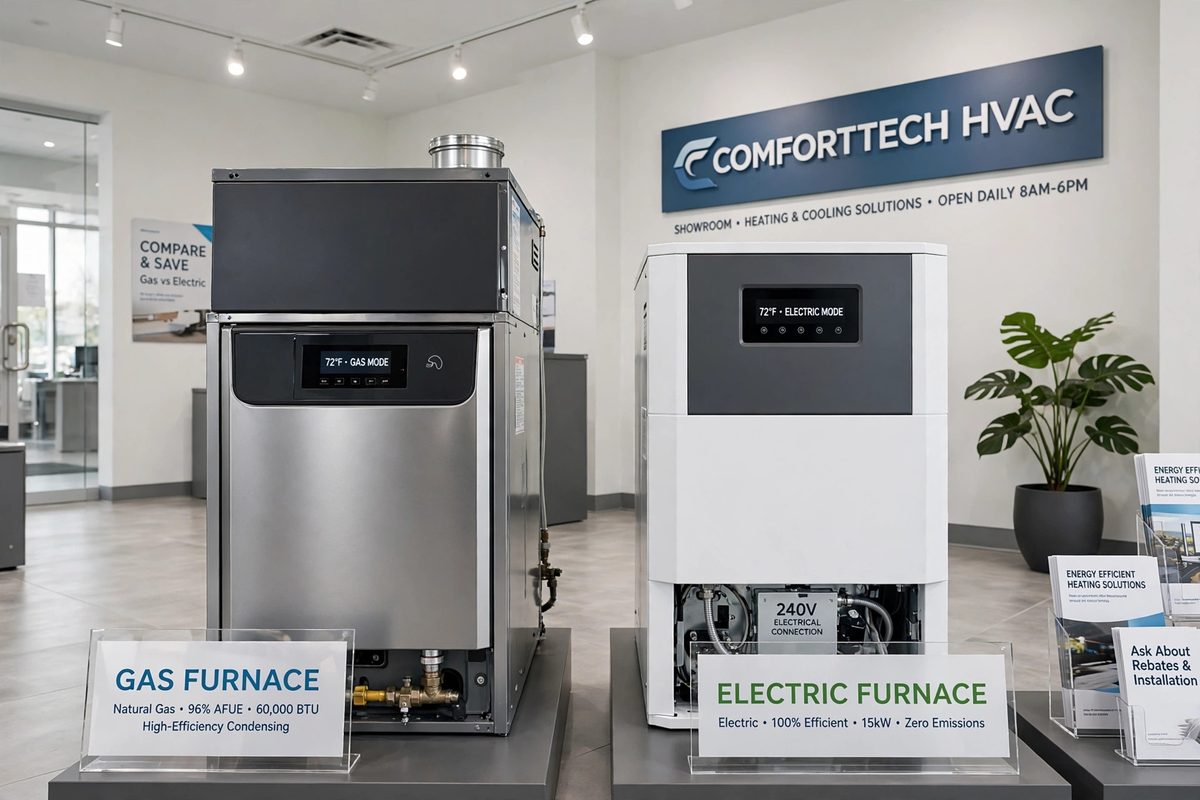
How each type makes heat
A gas furnace burns natural gas in a burner assembly, heating a heat exchanger that warms the air passing over it. Combustion exhaust vents outside through a flue. An electric furnace has no flame at all: electric heating elements, much like a giant toaster, warm the air directly as the blower moves it across them. No combustion means no flue, no gas line, and no carbon monoxide risk from the heating process itself.
What your home already has matters most
If your house has a gas line run to the furnace location, staying with gas keeps the project straightforward. If it does not, switching to gas means running a new line, adding venting, and meeting combustion clearances, which adds meaningful scope to the job. Plenty of Northern Virginia neighborhoods, especially newer townhome communities, are all-electric by design, and for those homes an electric furnace is the natural fit. Before falling in love with one type, find out what your home makes easy.
Comfort and everyday feel
Gas furnaces produce hotter air at the register and tend to satisfy the thermostat in shorter, more powerful cycles. Electric furnaces warm the air more gently and often run longer cycles, which some homeowners find produces steadier room-to-room temperatures. Neither is universally more comfortable; it comes down to how the unit is sized for the house and how well the ducts distribute the air.
Upkeep differences
Gas furnaces need annual attention to the combustion side: burners, the heat exchanger, venting, and safety controls. That yearly inspection is non-negotiable because combustion problems carry safety consequences. Electric furnaces skip all of that, so their maintenance is simpler: filters, electrical connections, blower, and controls. Simpler does not mean optional, though. A neglected electric furnace still loses efficiency and still breaks down. Our furnace maintenance service covers both types.
We will look at what your home already supports and lay out both options plainly.
Making the call
Start with infrastructure: keep the fuel your home already supports unless you have a strong reason to switch. Then think about the long term. A gas furnace pairs well with a home that already uses gas for other appliances. An all-electric home is usually happiest staying electric. Either way, correct sizing matters more than fuel type for comfort and efficiency. A proper furnace installation starts with a load calculation, not a guess.
Frequently asked questions
Can I switch from an electric furnace to gas?
Yes, if gas service reaches your street and your home can accommodate the line, venting, and clearances. It adds scope beyond a straight replacement, so get the full picture, line work included, before deciding.
Do I need new ductwork to change fuel types?
Usually not. Both furnace types connect to the same duct system. The ductwork only becomes part of the project if it is undersized, leaking, or damaged, which a good installer checks regardless of fuel type.
Which type lasts longer?
Both last a similar span with proper maintenance, roughly 15 to 20 years. Electric units avoid combustion wear, but they cycle heating elements that eventually fail. Maintenance habits matter more than fuel type for longevity.
Is one safer than the other?
Electric furnaces avoid combustion entirely, so they carry no carbon monoxide risk from heating. Gas furnaces are safe when properly installed and maintained, with annual inspection of the heat exchanger and venting. Safety comes down to installation quality and upkeep either way.
What if my street has no gas line?
Then electric is your answer unless extending gas service is practical, which it rarely is for a single home. Modern electric furnaces heat reliably; pair one with good ductwork and a smart thermostat and most homeowners never miss gas.
Sources and Further Reading
Last updated: October 19, 2026
Choosing between gas and electric for your home?
Tell us what your house already has. We will help you pick the type that fits, then size it right.