Short cycling is hard on everything it touches. Every startup is the most stressful moment for motors, igniters, and controls, so a furnace that starts six times an hour instead of two burns through its lifespan and its efficiency at the same time. It also never quite gets the house comfortable, because it shuts off before the heat reaches the far rooms.
The causes fall into two groups: things a homeowner can check in minutes, and things that need a technician's tools. Here is how to tell which group you are in.
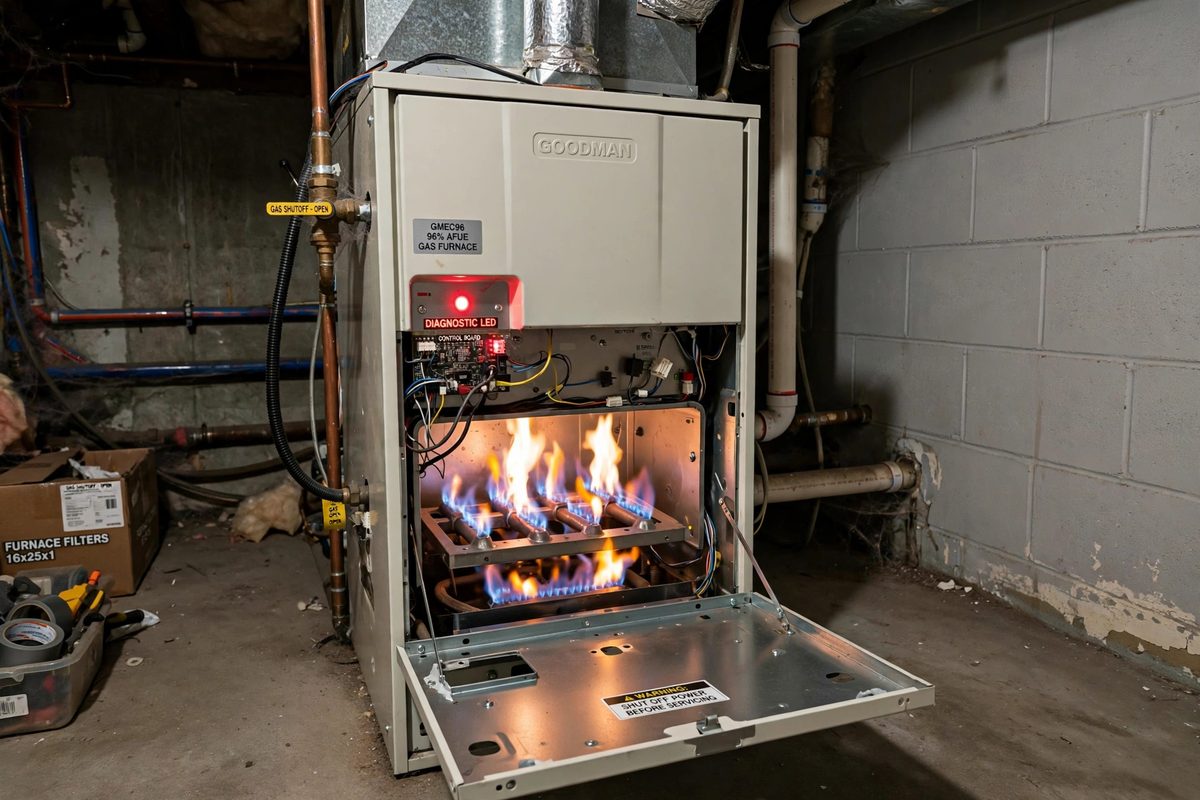
The usual suspect: restricted airflow
More short cycling traces back to airflow than to any other single cause. A clogged filter, closed-off rooms, or blocked return grilles make the heat exchanger overheat, and the high-limit switch shuts the burners down to protect it. The furnace cools, restarts, overheats again, and the loop repeats. Replace the filter, open the supply registers, and make sure return grilles have clear space in front of them. If the cycling stops, you found it.
Thermostat placement and settings
A thermostat in direct sun, above a heat register, or near a drafty door reads the wrong temperature and shuts the furnace off early. So does a thermostat with dying batteries or a failing sensor. If the short cycling started after a thermostat move or replacement, placement is the prime suspect. Our thermostat installation and repair service includes relocating thermostats that were never in a sensible spot.
A furnace that is too big for the house
Oversized furnaces heat the air near the thermostat so fast that the system satisfies the call for heat before completing a proper cycle. This one cannot be fixed with a filter change: it is a sizing problem baked in at installation. If your furnace has short-cycled since day one and your home heats unevenly, an oversized unit is likely. A proper load calculation, the kind we do before any furnace tune-up assessment or replacement quote, confirms it.
Short cycling grinds down parts with every extra startup. Let a technician find the cause before it becomes a breakdown.
Ignition parts that need a technician
A dirty flame sensor is a classic cause: the burners light, the sensor fails to confirm the flame, and the control board shuts everything down as a safety response. Corroded igniters and failing control boards cause similar behavior. These parts live inside the combustion area, and cleaning or replacing them is technician work, not a homeowner project.
What you can safely check yourself
Work this short list before calling: replace the filter, open all supply vents, clear space around return grilles, and confirm the thermostat reads room temperature accurately and sits away from heat sources. If the furnace still short-cycles after that, the cause is inside the unit, and continuing to run it that way only accelerates wear. That is the point to call.
Frequently asked questions
How long should a normal heating cycle last?
Roughly ten to fifteen minutes in typical winter weather, with a few cycles per hour. Anything consistently under five minutes, repeated all day, is short cycling and worth investigating.
Is short cycling dangerous?
It is not an emergency by itself, but the constant overheating and restarting stresses the heat exchanger and electrical parts. Left alone for a season, it can turn a minor airflow problem into a major component failure.
Can I clean the flame sensor myself?
It is technically possible, but the sensor sits in the combustion area and the fix requires opening the burner compartment safely. Most homeowners are better off having it done during a service visit, where the technician can also check the igniter and burners at the same time.
Does short cycling waste energy?
Yes. Startup is the least efficient part of any cycle, and a short-cycling furnace spends a large share of its run time starting up. It also leaves rooms uncomfortable, which tempts people to raise the thermostat and waste more.
Will short cycling damage my furnace?
Over time, yes. Motors, igniters, and relays are rated for a certain number of cycles. Multiplying the daily cycle count wears them out years early, and repeated overheating can eventually crack a heat exchanger.
Sources and Further Reading
Last updated: October 19, 2026
Tired of a furnace that cannot finish a cycle?
Call Emberline Heating. We will find whether it is airflow, controls, or sizing, and fix it properly.