A gas furnace makes carbon monoxide every time it runs. In a healthy system, that CO goes straight up the flue and out of the house, never mixing with the air you breathe. Problems start when something breaches that path: a cracked heat exchanger, a blocked vent, or a flue that has come apart. Then CO can ride the supply air into living spaces, where you cannot see it or smell it.
The risk is real but manageable. It comes down to three things: keeping the furnace maintained, keeping the vents clear, and keeping detectors working. This guide covers all three.
Symptoms worth knowing
Carbon monoxide poisoning mimics the flu at first: headache, dizziness, nausea, weakness, confusion. The telltale clue is that everyone in the house feels it at once, and it eases when you leave. Pets acting strangely can be an earlier warning. If multiple people develop these symptoms together during heating season, get everyone into fresh air and call emergency services. Do not try to diagnose it yourselves.
Detector placement that actually protects you
Put a CO detector on every floor of the home, including the basement, and within earshot of every sleeping area. One near the furnace room is smart, but not so close that normal startup puffs cause nuisance alarms; about fifteen feet away is a common guideline. Test each detector monthly with its test button, swap batteries yearly unless the unit is sealed, and replace the whole detector on the schedule printed on its back. A detector past its life looks fine and protects nothing. Our carbon monoxide safety and detection page covers placement in more detail.
If the alarm sounds, do this
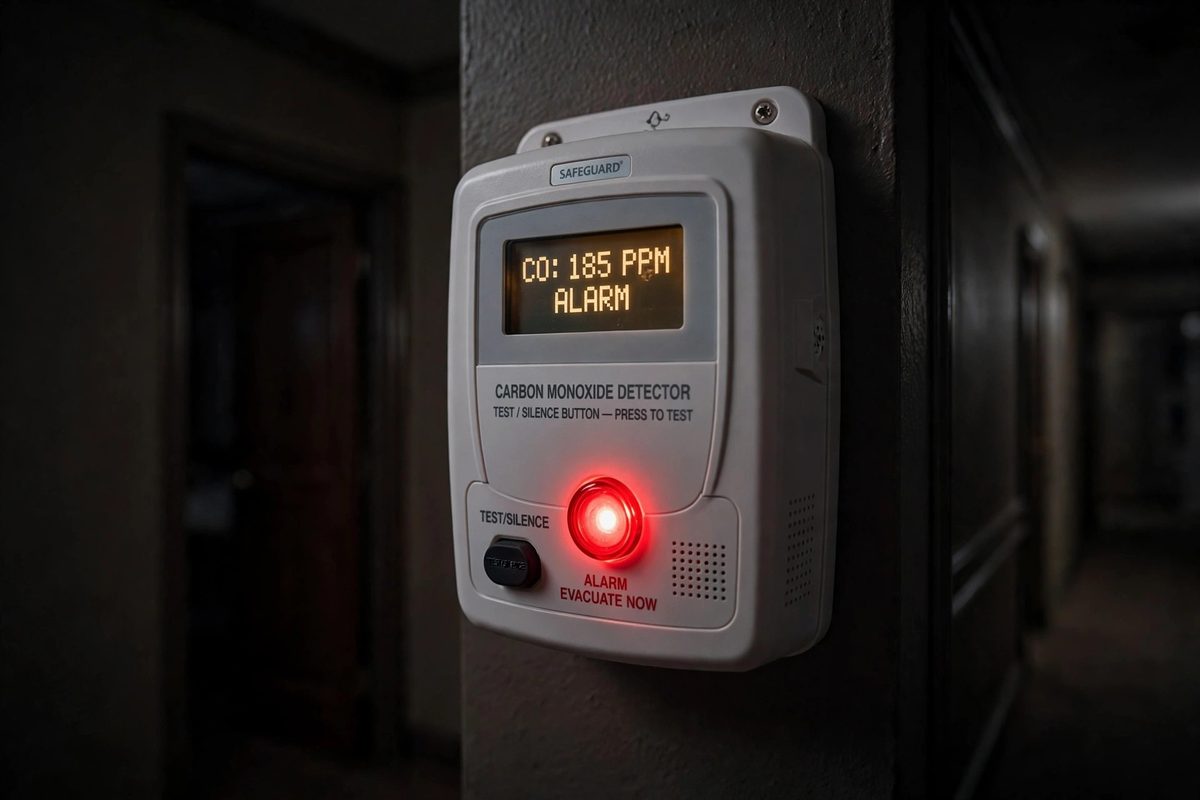
Take every alarm seriously. Get everyone, including pets, out of the house immediately. Call 911 from outside. Do not open windows on your way out to ventilate, do not silence the detector and go back to bed, and do not re-enter until emergency responders say it is safe. If the alarm stops on its own, still leave and still call. CO levels fluctuate, and a silent detector an hour later does not mean the danger passed.
How yearly service lowers the risk
A fall tune-up is the main preventive measure. The technician inspects the heat exchanger for cracks and rust, checks the burners and flame quality, verifies the flue is intact and drafting properly, and tests safety controls. A cracked heat exchanger found in October is a repair; the same crack found after a January CO alarm is an emergency. Annual inspection is what keeps a manageable risk from becoming a real one.
If you cannot remember, they are probably overdue. We check detectors and combustion safety on every tune-up.
Vents and flues: the overlooked half
Even a perfect furnace is unsafe with a blocked exhaust. After heavy snow, check that the furnace vent termination outside is not buried. In fall, birds and squirrels nest in flues. Inside, never store boxes or chemicals against the furnace or blocking its combustion air openings. The furnace needs both a clear path out for exhaust and a clear supply of air in.
Frequently asked questions
How many carbon monoxide detectors does my home need, and where?
On every floor, including the basement, and near every sleeping area so the alarm wakes you. Add one near the furnace room, roughly fifteen feet away to avoid nuisance alarms from normal startup. Follow the manufacturer's instructions for mounting height.
How often do CO detectors need replacing?
Follow the date printed on the back of each unit; most last between five and ten years depending on the model. When a detector expires, replace the whole unit, not just the batteries. Write the install date on the new one with a marker.
Can you smell carbon monoxide?
No. It is completely odorless and colorless, which is why detectors are essential. If you smell rotten eggs near a gas furnace, that is the odorant added to natural gas itself, a different and also serious warning.
Does a furnace tune-up check for carbon monoxide?
A thorough tune-up checks the things that cause CO problems: heat exchanger integrity, burner combustion quality, flue condition and draft, and safety controls. Some technicians also test ambient CO near the furnace. Ask what your tune-up includes.
What causes carbon monoxide from a furnace?
The common causes are a cracked heat exchanger letting exhaust into the supply air, a blocked or disconnected flue trapping exhaust, dirty burners producing excess CO, and inadequate combustion air starving the flame. All four are preventable with maintenance.
Should detectors be plug-in, battery, or hardwired?
Any type that is listed by a recognized testing lab works. Hardwired units with battery backup are the most reliable, since they keep working through power outages. Whatever type you choose, test monthly and replace on schedule.
Sources and Further Reading
Last updated: October 19, 2026
CO safety starts with a maintained furnace.
Schedule a tune-up that includes heat exchanger inspection, combustion checks, and detector verification.